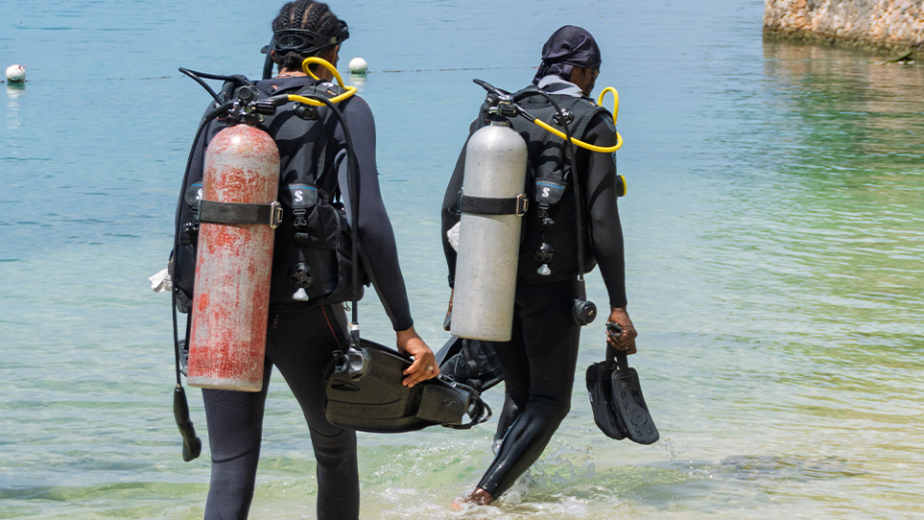
In Oracabessa Bay, exploring the underwater world can do more than introduce visitors to Jamaica’s marine life. It can help protect it. The bay’s tourism business model is built on the premise that the same ocean that draws visitors to Oracabessa generates the resources needed to preserve it.
The Dive Shop, established through a partnership between the Oracabessa Marine Trust (OMT) and the Golden Eye Foundation, is Jamaica’s first dive centre managed by a nonprofit organisation. As a social enterprise, it allows visitors to experience the bay through snorkelling, scuba diving, and boat excursions, while directing profits toward marine conservation.
For Travis Graham, executive director of the Golden Eye Foundation and a board member of OMT, the idea was to create a sustainable financial mechanism for conservation, one that would also generate economic opportunities for the community.
“Together, the Marine Trust and the Golden Eye Foundation got some funding from the Tourism Enhancement Fund (TEF) to build the Dive Shop here at Oracabessa Bay,” Graham explains.
Established in 2017, OMT has committed to protecting and restoring the bay’s marine ecosystems. But conservation requires more than good intentions. Coral restoration, in particular, demands equipment, trained personnel, and consistent maintenance, all of which cost money. The Dive Shop was developed to help meet those needs by turning a visitor experience into a source of funding
“A social enterprise, really, is a business that is established to support a social outcome,” Graham says. “In our case, our social outcome is marine conservation.”
The model connects the economic value of Oracabessa’s marine environment with the resources needed to sustain it. But the circular economy also encompasses the people who make the enterprise work. According to Graham, Dive Shop recruits all staff from the local community, drawing its workforce from the fishing community. Offering official PADI (Professional Association of Diving Instructors) certification, a globally recognised scuba diving qualification, local fishers have gained opportunities to become dive instructors, boat captains, boat hands and dive shop operators through the enterprise.
Continued
The result is a model in which the same community that depends on the sea for its livelihood can participate in the tourism industry while contributing to the protection of the marine resources on which both sectors rely.
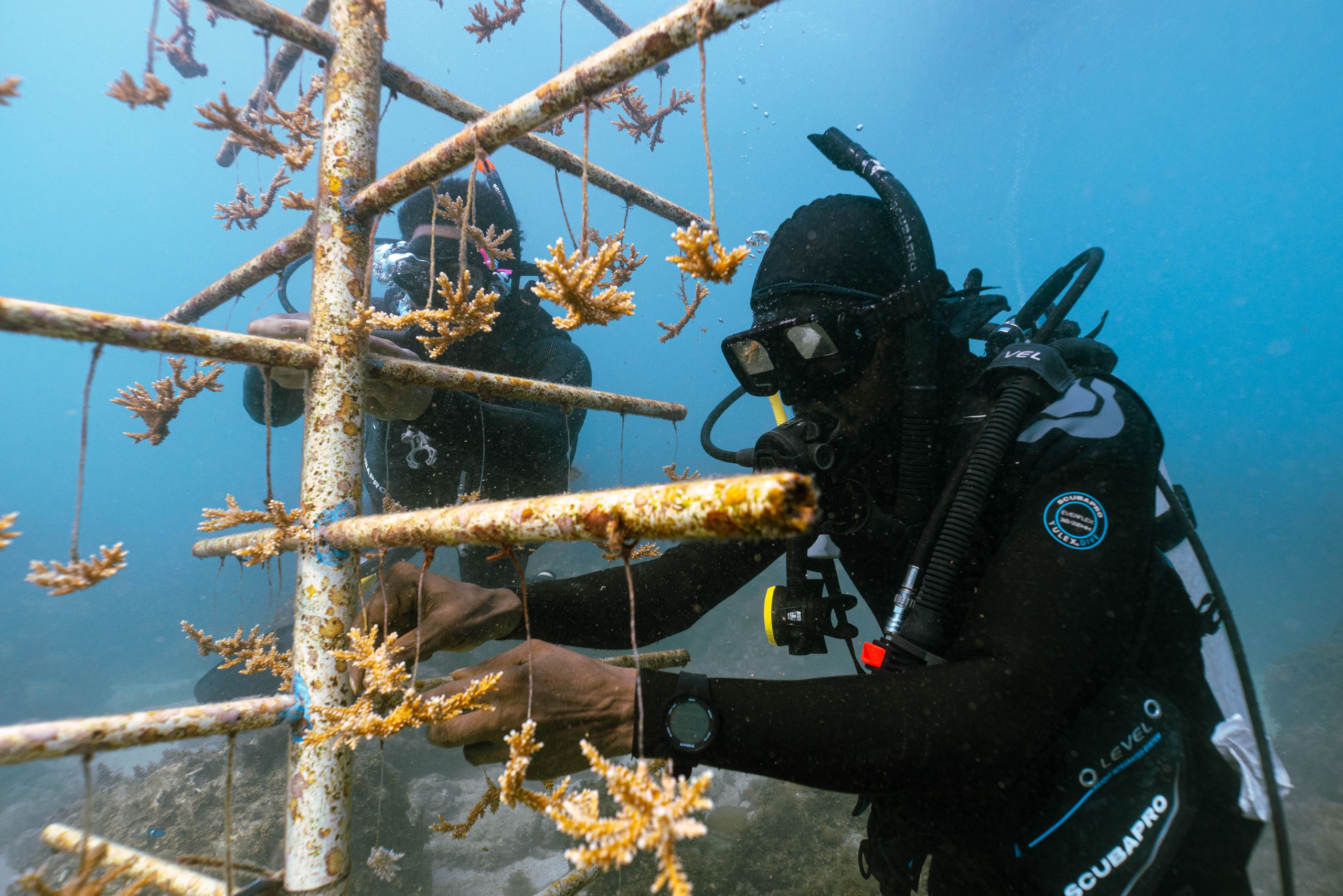
“A dive shop directly supports all restoration efforts because in order to do coral restoration, you have to scuba dive,” Graham explains.
“We have our own apparatus and our own equipment to support conservation. So the community members, they come here, we get the gear, we head out to our reefs, we do our maintenance, we do our planting, and we stock our coral trees.”
The Dive Shop, therefore, is not simply a commercial venture operating alongside the conservation programme. Its equipment, trained personnel and revenue directly support the practical work of restoring the reef. The same diving infrastructure that takes visitors into the water also enables conservation workers to maintain coral nurseries and transplant coral fragments.
This relationship makes the business model particularly significant: the activity that generates income for the Trust is also essential to carrying out its environmental mission.
For Shannon Brown, Dive Shop manager and marine science tour guide, the enterprise represents an opportunity to experience that relationship firsthand.
“You cannot give back from home. Immerse yourself in the environment!” she says, reflecting on why she decided to become involved in the work.
Brown’s own journey at the Dive Shop reflects the opportunities it creates. After learning to swim there, she has progressed to snorkelling and is preparing to take up scuba diving. Her experience shows how engagement with the marine environment can grow into a deeper commitment to protecting it.
“I decided that my actions are going to help to save the ocean,” she says.
Brown says first-time visitors can expect what she describes as “the true Jamaican scuba experience”. Beyond the tropical reefs and colourful marine life, guests may see local fishers using traditional fishing tools, including fish pots, offering a glimpse into the community’s relationship with the waters that sustain it. Through the Dive Shop, they also help preserve the environment they have come to enjoy.
For the community, the benefits extend to employment, skills development and opportunities to participate in a growing tourism sector without abandoning the knowledge and traditions associated with fishing. For the marine environment, the enterprise provides ongoing support for restoration work requiring sustained investment.
Graham describes it as a sustainable financial mechanism for conservation, one that benefits both the community and the ecosystem.
In Oracabessa, the Dive Shop shows how marine conservation can become part of the local economy rather than an effort that depends solely on external funding. By making ocean exploration the entry point to environmental stewardship, the enterprise gives visitors a reason to dive in. It gives the community a stake in ensuring there is still something worth discovering beneath the surface.