The story of the Oracabessa Bay Marine Protected Area (MPA) is one of fate’s allies finding common ground in a shared resource. Here, protecting the ocean required more than conservation ambition. It required the people who depend on it to believe in the cause.
That belief became the foundation of a partnership between Oracabessa’s fishing community, the Golden Eye Foundation and the Oracabessa Marine Trust (OMT), bringing together local knowledge, tourism investment and community participation to protect the bay’s marine ecosystems while sustaining the livelihoods they support.
For Travis Graham, executive director of the Golden Eye Foundation and an OMT board member, the collaboration was a natural fit.
“Oracabessa Bay isn’t the traditional mass tourism resort destination. We are actually more like a community tourism destination,” Graham explains. “So for Golden Eye to work with the fishers, being that they both operate within the same bay, just made a lot of sense.”
With Golden Eye Resort situated in the community, tourism and fishing were already part of everyday life. Many resort employees live in Oracabessa, and the fishing beach was right next door. The bay was not simply a picturesque setting for visitors; it was a shared resource, integral to the community’s economic and social life.
Graham says that establishing the Golden Eye Foundation created a direct channel to improve quality of life in Oracabessa while enhancing its natural environment. Working with the fishing community presented an opportunity to protect marine resources without losing sight of the people whose livelihoods depended on them.
Continued
A healthy bay, after all, benefits everyone. Thriving marine life means more for fishers to catch, more for customers to buy, and more for visitors to discover when they venture into the water.
But translating that shared interest into a Marine Protected Area required the stakeholders to agree on what conservation would look like in practice.
Graham identifies David Murray, president of the Oracabessa Bay Fishers Association, as a key figure in bringing the fishing community into the process. Through his involvement with Golden Eye Resort and the foundation, Murray helped engage more fishers, expanding participation and creating opportunities for sustained dialogue around the proposed protected area.
The process was not without resistance. For generations, fishers had worked the waters of Oracabessa without designated fishing restrictions. Naturally, introducing a protected area raised concerns about access to fishing grounds and the potential effect on household incomes.
“There would have been a lot of pushback early on when we were discussing the establishment of the Marine Protected Area,” Graham recalls. “It’s natural. Fishers have been fishing here for generations.”
The response was not to impose a conservation model on the community, but to involve its members in shaping one. Graham says close to 100 consultations took place over one to two years, allowing stakeholders to discuss their concerns and determine how the MPA could serve Oracabessa’s interests.
Ownership was central to those discussions.
“For us, it is important that the community owns this Marine Protected Area,” he says.
One of the most significant decisions was allowing the fishers themselves to determine the boundaries of the protected area. They could decide how much space to set aside for conservation. Next, fishers served as wardens and were trained as fisheries inspectors, further linking conservation to economic opportunity.
The Golden Eye Foundation is a key part of the formula; the relationship between tourism and marine protection couldn’t be ignored. Graham acknowledges that tourism development can have both positive and negative effects on marine ecosystems; sustainable practices are essential to ensure commercial activity does not undermine the resources it depends on. From wastewater treatment and landscaping to how businesses are built and managed, he argues that sustainability must guide operations at every level. Visitors also have a role, particularly when their spending supports businesses committed to marine conservation.
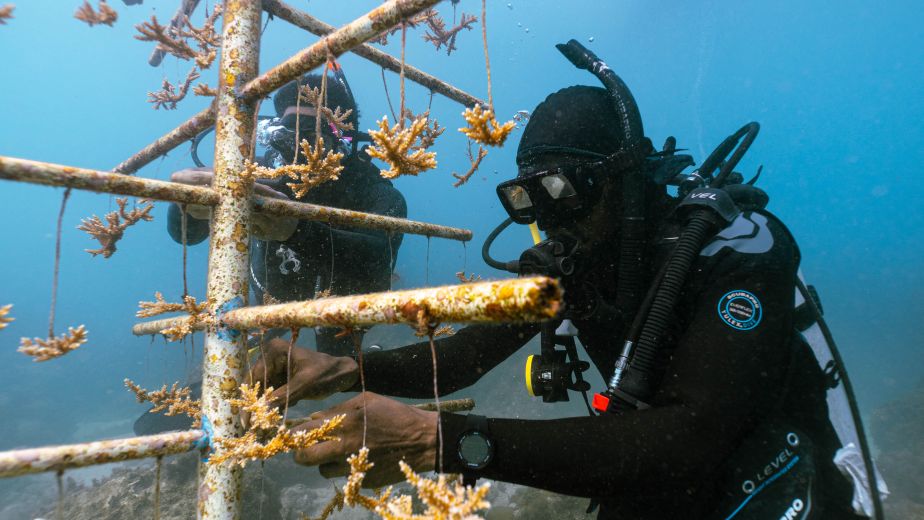
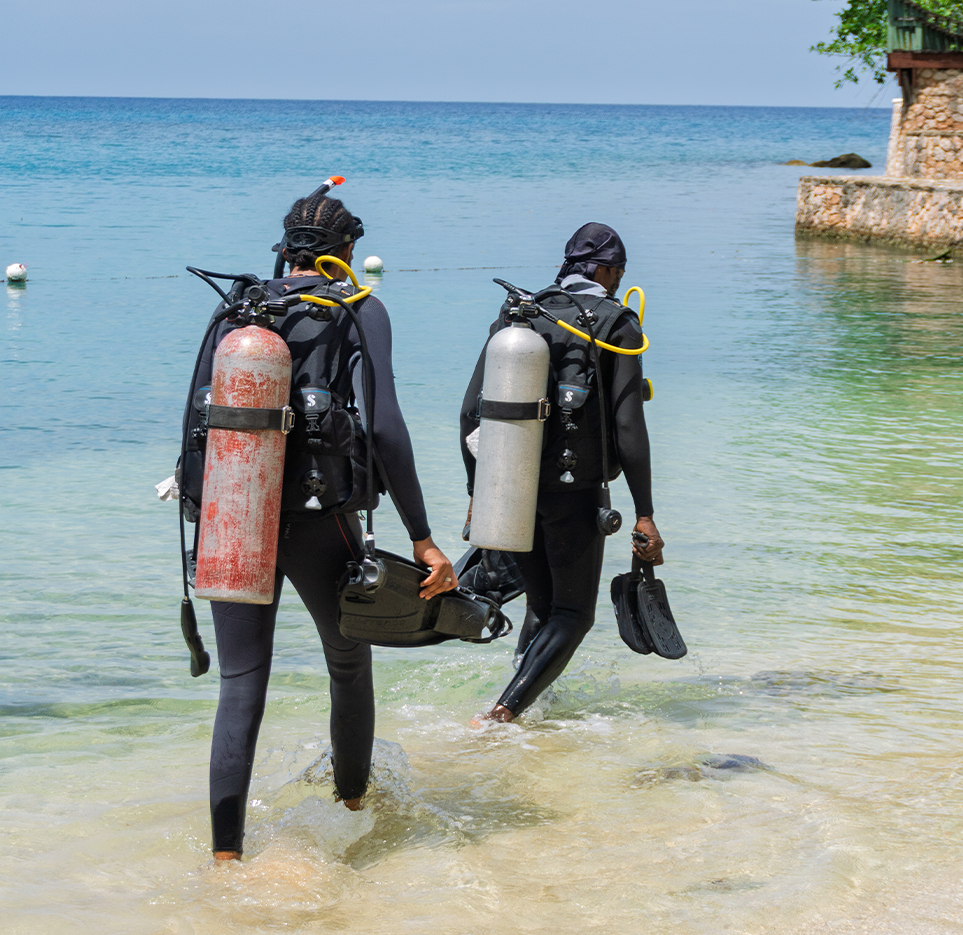
Through the Dive Shop, for example, visitors can snorkel, scuba dive, and explore the underwater environment while supporting OMT-backed conservation efforts.
“When they support our community, they are actually supporting conservation,” Graham says, describing the relationship as a win-win for visitors and the destination.
The partnership that made the MPA possible ultimately rests on the understanding that protecting Oracabessa Bay is a shared responsibility. Fishers bring generations of knowledge about its waters, tourism stakeholders can help mobilise resources, and conservation efforts provide a framework for ensuring that the bay remains productive and healthy.
Now, Graham invites visitors who share that commitment to experience Oracabessa beyond the resort, encouraging them to stay in local accommodation, visit community businesses, and engage with the people who call the bay home.
It is an invitation to participate in a model of tourism where the natural environment and the community are not separate attractions, but interconnected parts of the same experience.
In Oracabessa, conservation work began by bringing people to the table. Its continued success depends on keeping them there, united by the understanding that a thriving bay is one in which the entire community has a stake.
Articles from the sea